
How Advanced Implements Reduce Fuel Consumption & Increase Productivity
November 24, 2025How Agricultural Implements Are Supporting Organic Farming
November 24, 2025Stubble burning has become one of the biggest environmental challenges in India, especially in states like Punjab, Haryana, and Uttar Pradesh. Farmers often burn crop residue to quickly prepare fields for the next sowing season. While it seems like a fast solution, stubble burning leads to air pollution, soil degradation, and major health issues.
However, new-age straw management implements are offering farmers a better alternative—helping them manage crop residue efficiently without burning. These machines not only protect the environment but also improve soil productivity and reduce field preparation time.
1. Why Farmers Burn Stubble
Farmers burn stubble mainly because:
-
There is very little time between harvesting and sowing the next crop
-
Crop residue is difficult to manage manually
-
Traditional methods are expensive and slow
-
Burning seems like the fastest method
But burning causes:
-
Severe air pollution
-
Loss of soil nutrients
-
Death of beneficial soil microbes
-
Risk of fire accidents
-
Poor soil structure for the next crop
This is where modern straw management equipment becomes critical.
2. What Are Straw Management Implements?
Straw management implements are machines designed to handle crop residue sustainably. https://www.facebook.com/GarudAgriImplements/They chop, mulch, collect, or incorporate straw back into the soil—eliminating the need for burning.
Some commonly used implements include:
-
Straw Reaper
-
Super Seeder
-
Mulcher
-
Rotavator with SMS (Straw Management System)
-
Baler
-
Rake
Each machine has a unique role in managing residue efficiently.
3. Types of Straw Management Implements & How They Help
✔ 1. Straw Reaper
A straw reaper cuts, threshes, and cleans straw in one pass.

Benefits:
-
Removes leftover stubble after harvesting
-
Makes the field clean for immediate sowing
-
Collects straw for livestock or biofuel
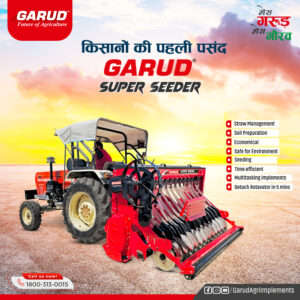
✔ 2. Super Seeder
A game-changing implement that mulches residue and seeds wheat simultaneously.
Benefits:
-
No need to remove or burn stubble
-
Saves time and fuel
-
Reduces labour cost
-
Improves soil moisture retention
✔ 3. Mulcher / Shredder
A mulcher chops stubble into small pieces and spreads it evenly across the field.

Benefits:
-
Converts stubble into natural mulch
-
Prevents soil erosion
-
Increases organic matter
✔ 4. Baler
A baler compresses straw into compact bales.
These bales can be sold to:

-
Biomass plants
-
Paper industry
-
Cattle farms
-
Biofuel production units
Benefits:
-
Extra income for farmers
-
Clean fields without burning
✔ 5. Rotavator with SMS
An SMS system helps manage leftover paddy straw while rotavating the field.
Benefits:
-
Ensures uniform mixing of residue
-
Enhances soil aeration
-
Makes land suitable for immediate sowing
4. How Straw Management Implements Help Stop Stubble Burning
✔ A. Fast Field Preparation
Implements like Super Seeder and Rotavator help prepare fields quickly, even with heavy residue.
✔ B. Cost-Effective Solution
Modern machines reduce labour, fuel, and time—making them cheaper than burning in the long run.
✔ C. Improved Soil Health
Residue incorporation improves:
-
Soil organic carbon
-
Earthworm activity
-
Nutrient recycling
This leads to better yields.
✔ D. Environmental Protection
Reduces:
-
Air pollution
-
CO₂ emissions
-
Health issues in nearby cities
✔ E. Extra Income Opportunities
Implements like balers turn waste into revenue.
5. Benefits of Avoiding Stubble Burning
-
Healthier soil with long-term fertility
-
Better moisture retention
-
Higher crop yields
-
Reduced fertilizer requirement
-
Cleaner air for communities
-
Sustainable farming practices
Conclusion
Straw management implements are transforming agriculture by providing practical, eco-friendly alternatives to stubble burning. With tools like Super Seeders, Mulchers, and Balers, farmers can manage residue efficiently while improving soil health and increasing productivity.
Adopting these machines is not just better for the environment—it’s better for farmers’ profits and the future of agriculture.
